
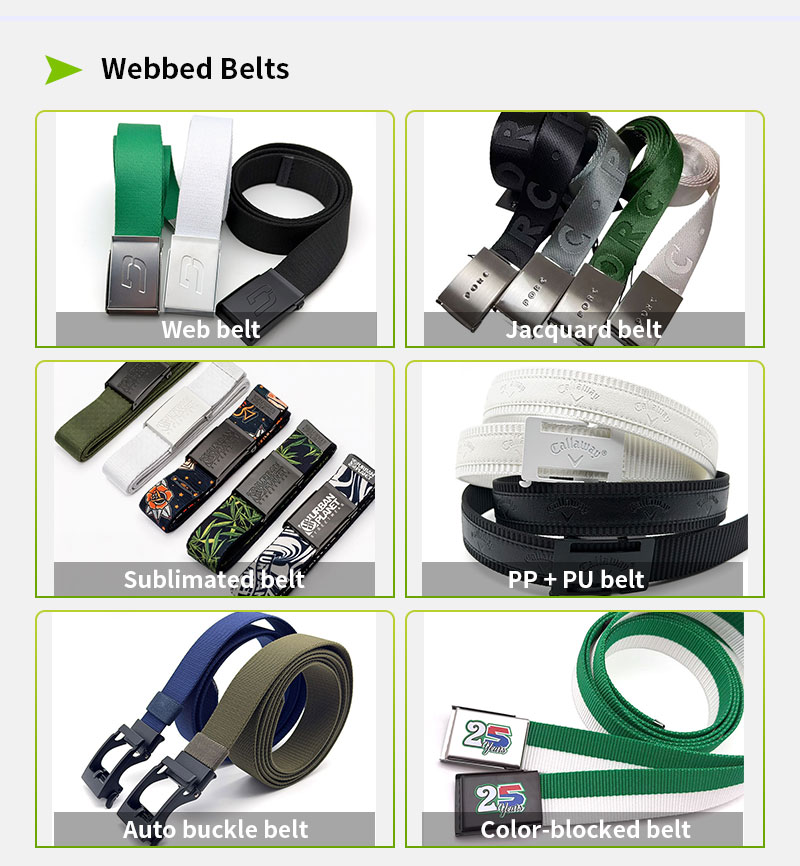
When sourcing webbed belts, the material is one of the most important factors. Different materials affect elasticity, durability, comfort, and production cost. Understanding these differences helps buyers choose the right belt for their market.
Polyester Webbing Is the Most Popular Choice
Polyester webbing is the most widely used material for belts.
It offers excellent color fastness and UV resistance. The belt keeps its color even after long outdoor use. Polyester also resists water and does not shrink after washing.
This material supports jacquard weaving, heat transfer printing, and custom logos. Because of its stable quality and competitive price, polyester is the first choice for golf belts, casual belts, and promotional belts.
Best for:
Golf belts
Outdoor belts
Promotional belts
OEM & ODM projects
Nylon Webbing Offers Better Comfort
Nylon webbing feels softer than polyester. It has a smoother surface and a slight natural shine.
Nylon also provides better abrasion resistance, making it suitable for premium woven belts.
However, nylon costs more and can age faster under strong sunlight. It is more common in high-end fashion and golf belt collections.
Best for:
Premium golf belts
Fashion belts
Luxury casual belts
PP Webbing Is Lightweight and Quick Dry
PP (Polypropylene) webbing is very light.
It absorbs very little water and dries quickly. This makes it suitable for sports and outdoor activities.
Compared with polyester, PP offers lower color brightness and less elasticity. It is often used for budget products and promotional orders.
Best for:
Sports belts
Workwear belts
Promotional gifts
Spandex Gives the Belt Stretch
Elastic woven belts contain spandex yarn.
Most quality elastic belts use 5% to 12% spandex. A higher spandex content provides better stretch and recovery.
The belt moves with the body and stays comfortable during golf, driving, or long working hours.
Good elastic belts return to their original shape after stretching.
Typical applications:
Elastic golf belts
Stretch belts
Performance sports belts
Cotton Blend Creates a Classic Look
Cotton blend webbing feels soft and breathable.
It is often chosen for casual and vintage styles.
However, cotton absorbs water and has lower tensile strength than synthetic fibers. It is not recommended for heavy outdoor use.
Best for:
Casual belts
Fashion collections
Lifestyle brands
How to Choose the Right Material
There is no single material for every project.
Polyester is the best option for most OEM orders because it offers good durability and cost control.
Nylon works well for premium collections.
PP fits large-volume promotional projects.
Spandex is necessary for elastic woven belts.
Cotton blend is suitable for brands that focus on casual fashion.
A professional woven belt manufacturer can also combine different yarns to achieve the right balance between comfort, durability, and price.
The right webbing material makes a big difference in comfort, durability, and performance.
Understanding these options will help you choose the best woven belt for your market and custom project.
If you need custom webbed belts, feel free to contact our team for more information.